


Catherine the great furniture is one of the richest periods in the history of decorative art. These furnishings, which were produced under the reign of Catherine the Great, were not merely objects of the home, but were also manifestations of power, intelligence, and cultural aspiration. Combining French Rococo beauty with the new Neoclassical rigor, Catherine the Great furniture characterized the interiors of the 18th century Russian empire. Historians, interior designers and antique furniture collectors of today admire these pieces globally. This article explains what is Catherine the Great furniture, why it became popular, and all you should know including styles and craftsmanship, as well as collecting and preservation.
What is Catherine the Great Furniture :
Catherine the Great furniture High-end imperial furniture that was commissioned, assembled or approved of by Empress Catherine II of Russia between 1762 and 1796. This legend states that the pieces had outrageous and shocking designs such as tables on legs, which were designed in the shape of the male anatomy. Historians largely believe this tale to be rumour and not fact, though it is a well-known legend to her name.
History of Legends of Catherine the Great
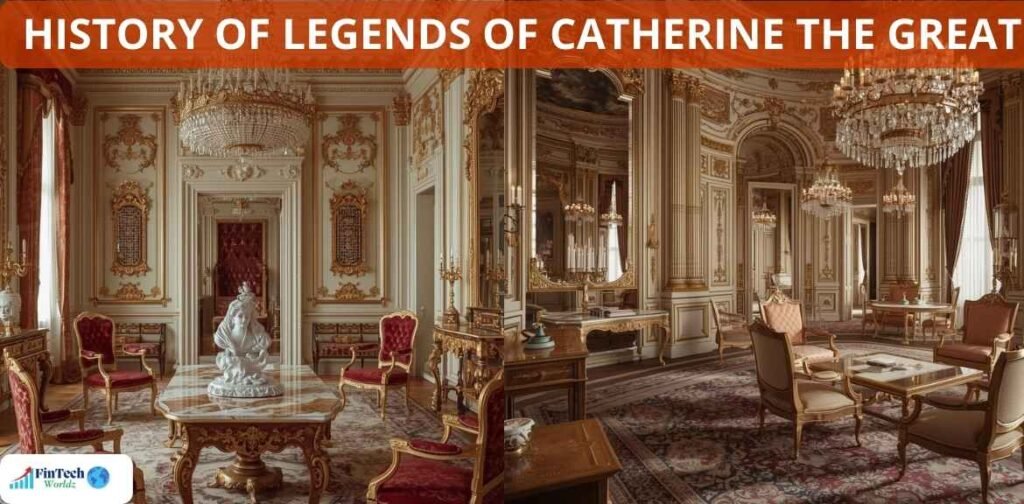
Catherine II (born Sophie Friederike Auguste von Anhalt-Zerbst; 1729-1796), also known as Catherine the Great, was a German-born Russian empress, who ruled Russia between 1762-1796. The 34 years of reign saw tremendous expansion of her territories, her administration reformed and her culture blossomed making Russia a great power in Europe. Catherine had a number of romantic relationships during her lifetime and the men who she relied on were mainly the younger men and some could manage to gain influence or status due to their proximity to her. In the course of time, these relations, coupled with the politics and enmity between the Russian nobles and the courts, gave rise to the rumors, according to which she was too obsessed with pleasure. This also involved stories of her supposedly having erotic furniture though there is no concrete historical evidence to prove this.
There is an ancient and much-repeated story that Catherine the Great in her home at Gatchina Palace had a secret room close to her living quarters whose furnishings were odd. They were painted in her palaces, her official residences, her state rooms in the Catherine Palace, Winter Palace, and Pavlovsk Palace. In contrast to the common European furniture of the 18th century, the furniture ordered by Catherine the Great was intended as an instrument of imperial identity and not as a means of home comfort.
Every work was a commission of the top masters of Europe and Russia of rare wood, gilded bronze ormolu, and other luxurious material, and the designs were strictly coordinated to political symbolism and the ideals of the Enlightenment. The early commissions were of Rococo grace and the subsequent ones were of Neoclassical and Russian Empire austerity which represented the change in her reign.
These furnishings were not mass-produced; they were recorded one by one, and were frequently marked up with stamps to represent palace collections, so provenance is very necessary to their historical and cultural importance.
During the period that Russia was trying to establish itself as a European superpower, Catherine II employed art, architecture and furniture as means to visually express elegance and power.
Why is Catherine the Great Furniture Famous?
Catherine the Great furniture can be remembered due to five main reasons:
1. Imperial Patronage
Catherine II took artistic decisions herself. Enlightenment Furniture was commissioned that was to represent her symbol of an enlightened ruler as opposed to just a monarch.
2. European Craftsmanship
She brought in works of France, England, and Germany and used legendary works of cabinetmakers whose works are considered the best antiques in the world.
3. Artistic Transition
Her reign was accompanied by a significant change in design, the Rococo profusion that gave way to the Neoclassical discipline, which made her furniture historical in-between and stylistically unusual.
4. Exceptional Provenance
Most of the surviving works survived in collections in palaces or museums like the Hermitage Museum, which offers continuous historical records.
5. Auction Value
Furniture of Catherine-era is also frequently seen in the big sales at Christie’s and Sotheby’s, where it has frequently brought many multi-million-dollar sales.
Catherine the Great furniture History Background
Russia was culturally underrated, and politically strong when Catherine took the throne in 1762. She relied on arts, and furniture, in particular, to rebrand Russia in the line with the other countries France and England.
| Period | Furniture Direction | Cultural Meaning |
| 1760s | Rococo imports | Display of luxury and European alignment |
| 1770s | Neoclassical transition | Enlightenment ideals and order |
| 1780s–90s | Russian Empire refinement | National confidence and authority |
Signature Styles of Catherine the Great Furniture
Rococo Furniture (Early Reign)
In the early reign of Catherine the Great, Rococo furniture was the most common decor in her residence, the taste of the aristocracy of France being then advanced and luxurious. These works were focused on the elegance and movement with the help of curved cabriole legs, asymmetrical shell and floral patterns and soft pastel upholstering in combination with the lacquered finishes. The typical elements, including bombé commodes, gilded console tables, and writing desks with concealed drawers, produced a sense of lightness, decorative and visual charm that gave Catherine the appearance of a very advanced European monarch.
Neoclassical Furniture (Subsequent Reign)
By the 1770s Catherine was deliberately approaching Neoclassical furniture, based on the art and philosophy of ancient Greece and Rome. This style was later more conservative and used straight lines, rigid symmetry, and classical motifs like columns, laurel wreaths, and urns and there was less ornamentation in favor of intellectual symbolism. The furniture such as klismos chairs, pier tables with marble tops, daybeds, and ceremonial thrones were designed in a way that Catherine was very close to the ideals held by the Enlightenment and reflected her reign as reasoned and disciplined and philosophical.
Catherine the Great furniture Materials and Craftsmanship
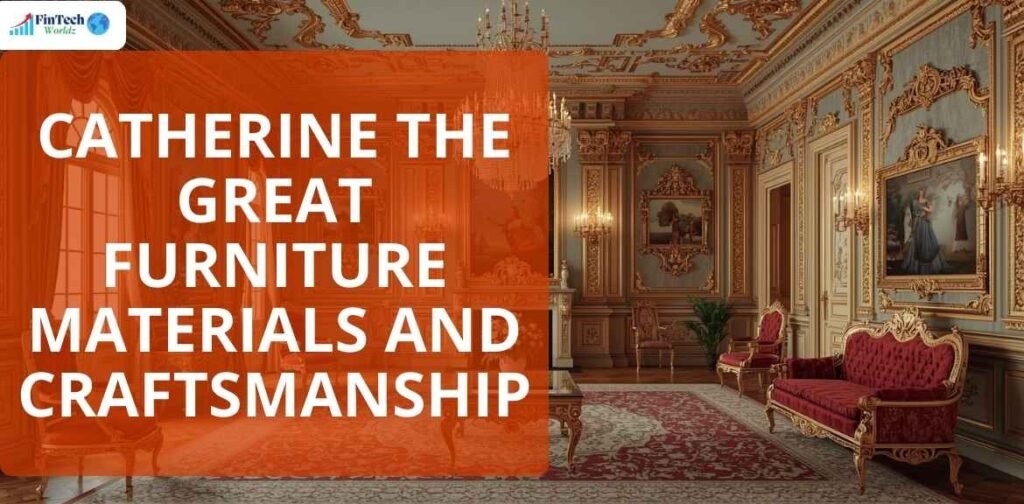
Catherine the Great furniture is characterized with materials of high quality:
| Material | Purpose |
| Mahogany (often Siberian) | Durability and prestige |
| Gilded bronze (ormolu) | Decorative brilliance and status |
| Marble | Monumentality and classical reference |
| Porcelain panels | Artistic storytelling |
| Silk damask | Regal upholstery |
Paris or London would be the top place where furniture was made, and later assembled or completed in Russian workshops.
Master Craftsmen Behind the Catherine the Great furniture
Catherine employed Europe’s finest artisans while cultivating Russian talent.
| Name | Key Contribution |
| David Roentgen | Mechanical desks, secret compartments, and innovative transformation furniture |
| Jean-Henri Riesener | Royal French furniture adapted for Russian imperial interiors |
| Imperial & English Workshops (Chippendale tradition, Russian masters) | Cabinets and bookcases blending Western styles with Russian court requirements |
Iconic Examples of Catherine the Great Furniture
After World War II, these pieces had been frequently restored with their original designs intact.
| Piece | Description | Location |
| Riesener Commode | Tulipwood with ormolu mounts | Hermitage Museum |
| Roentgen Bureau | Mechanical desk with hidden drawers | Pavlovsk Palace |
| State Throne | Gilded Neoclassical seat | Winter Palace |
| Mahogany Bookcase | English-style carved cabinet | Catherine Palace |
Catherine the Great Furniture Prices Today
The furniture that belonged to Catherine the Great is always retailing at highest prices in the international antique market. Virtues are highly reliant on the provenance, state, and designation of the maker that is documented, and associating it with the direct connection with either a palace or Hermitage drives the prices way beyond average 18th-century European furniture. The Catherine-related items have the advantage, which ordinary antiques do not have: they are scarce during the imperial reign, they survived wars and fires in palaces, and are highly valued in large houses: Christie, Sotheby, and Doyle.
| Category | Typical Price Range |
| Entry-level objects (plates, clocks, small garnitures) | $4,000 – $15,000 |
| Mid-tier furniture (Meyer tables, Roentgen caskets) | $20,000 – $50,000 |
| High-end masterpieces (Roentgen bureaux, secretaires) | $200,000 – $1,000,000+ |
| Rare sets & palace survivors | $70,000 – $200,000+ |
Catherine the Great furniture Past Auction Prices
Catherine the Great furniture usually fetches two to five times as much in comparison with ordinary French Rococo or English Georgian furniture. This value is motivated by makers marks, imperial ciphers and numbers of the palace inventories which turn furniture items to historical objects instead of decorative ones. Not only are the collectors buying into craftsmanship, but they are also buying into the direct connection to one of the most powerful rulers of Europe, so Catherine the Great furniture is an unstable high-end investment category.
| Factor | Impact on Price |
| Imperial provenance | 2–5× value increase |
| Renowned makers (Roentgen, Meyer) | Strong auction demand |
| Palace survival history | Significant rarity premium |
| Neoclassical style | Higher demand than Rococo |
Catherine the Great Furniture Real Pics: Modern Influence on Interior Design
Catherine-related furniture is still actively used in interior design, especially in luxury hotels, palaces-like homes, and Neoclassical resurgence interiors. Her visual language is often translated into the present by the designers with the use of ormolu accents, rich mahogany finishes and classical strict symmetry so that the historical splendor would intermingle with more modern comfort and size. You can see the real pics of Catherine the Great furniture here:
Guidelines for Care and Preservation
The furniture and associated antiques of Catherine the Great-era must be taken care of in order to maintain them in good condition. It is recommended that owners and institutions not exceed the humidity at 45 55 percent, not expose pieces to direct sunlight and use dry microfiber cloths when cleaning ormolu surfaces. Professional conservators should be employed to do any restoration because improper cleaning or amateur restoration may cause irreparable damage to historic finishes and much less authenticity or value.
Conclusion
Catherine the Great pieces of furniture are not just works of decorative art, but political history in the form of wood and bronze. These works of art represent a time when Russia had proclaimed itself a culture as great as those of Europe. Catherine II Roses into Rococo exuberance; then moves on to the Neoclassical discipline: her furniture carries a sense of ambition, intellect and eternal grace. Catherine the great furniture to collectors, historians and designers, continues to be a reference point to imperial craftsmanship and lasting luxury.
FAQs
Catherine the Great furniture is characterized by imperial origin, great craftsmanship, and a combination of Rococo and Neoclassical styles that were produced during the reign of Catherine the Great. These works were commissioned by the royal palaces and were focused on luxury and symbolism and political authority.
The majority of original works are also maintained in Russian state museums and palaces, primarily the Hermitage Museum, Catherine Palace, and the Pavlovsk Palace where they are exhibited as imperial interior collections.
It is both. The initial works are of French Rococo, curvy shapes and being lavishly decorated but the later works are of Neoclassical ideals with straight lines, symmetry and classical designs based on ancient Greece and Rome.
Authentic works whose provenance has been documented are highly sought after and may fetch millions in major auction houses such as Christie and Sothebys, depending on the condition, the maker and its historical significance.
Yes, replicas of high quality are mass-produced in high quantities to incorporate them in luxury interiors and historical restoration.
