

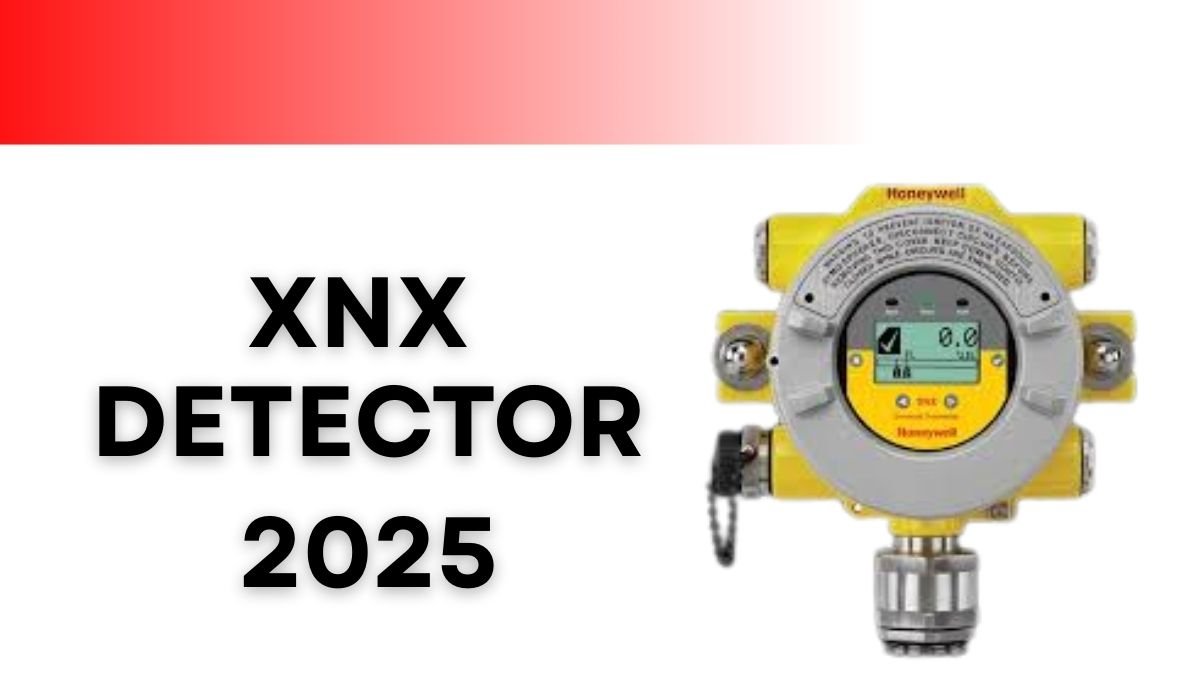
- In the world of industrial safety, processes, and engineering, only a few names resonate quite as strongly as Honeywell.
- You see, gas detection systems are essential for safety in all industries, but especially in oil, gas, and chemical plants. Among the brands, we understand that Honeywell is pretty famous, but more importantly, the XNX Honeywell Gas Detector is extremely famous.
- It is recognized for its flexibility, durability, and overall accuracy, and thus the XNX detector is designed for ultimate safety.
- This is considered to be a modular marvel which has been designed and launched keeping in mind the importance of workplace safety. This is especially the case to keep the workplace free from hazardous gases.
This article will give you a comprehensive guide on everything that you need to know about the XNX detector 2025. This includes how it works, its common fault codes, and much more.
What is the XNX Honeywell Gas Detector?
The XNX Honeywell Gas Detector is a versatile, top-of-the-line fixed gas monitoring system that is designed for tough environments. This is apt. for oil refineries, chemical plants, and other offshore platforms. It supports multiple sensor types, such as electrochemicals for toxic detection, catalytic beads for flammables, and infrared for hydrocarbons.
Its modular design is a shining example of technology done right. With its reconfigurable sensor slots, it becomes easy to swap cartridges without replacing the whole unit. This actually saves a lot of time and money, especially during evolving operations.
The communication options include a 4-20mA with HART, Modbus, relays, and wireless via Smart Interface Module (SIM). This helps make communication easy and seamless with PLCs or other control rooms in the organization.
In 2025, the XNX continues to meet all the updated safety standards and this comes with enhanced diagnostics for real-time alerts on several issues. These issues include poisoning and drift, thus ensuring a reliable performance in extremely adverse or harsh conditions.
The Key Features of the XNX detector 2025
The key features of the Honeywell XNX detector 2025 can be understood as follows:
- The gas detector comes complete with a modular design that supports ECC, catalytic bead (mV), infrared, and open-path IR sensors. These are reliable for detecting up to 20 hazardous gases.
- It comes as a plug-and-play sensor cartridges and they auto-recognize and configure. This allows easy swaps without requiring a full unit replacement.
- There are multiple communication protocols, including a 4-20mA with HART, Modbus RTU/RS485 relays. This also includes a wireless connection via Smart Interface Module.
- The heated optics in point IR sensors prevent poisoning and any hidden faults for reliable long-term performance.
- The magnetic interface for non-intrusive configuration, testing and reset is quite impressive – especially without opening the enclosure.
- The latching of alarms and faults ensures that the issues are addressed before clearing, thus enhancing safety compliance.
- The machine is quite low maintenance with consistency in quarterly calibrations. It supports zero/span checks via test gas kits.
- The event logging and relay outputs for integrations are also quite up to date and top-tier.
How does the XNX Honeywell Gas Detector work?
The XNX Honeywell Gas detector operates seamlessly by connecting to the gas sensors that actually measure the concentration of gases in the air. The process is simplified for your understanding. It includes:
- The sensor detects the gas molecules in the air, and then it converts the gas concentration into an electrical signal
- The XNX transmitter then processes the signal
- The system sends the data to a control panel or a monitoring system
- If the gas levels exceed the safe limits, then the alarms shall be triggered
The real-time monitoring allows the industries to prevent accidents like explosions, toxic exposure or deficiency in oxygen levels.
XNX Detector Calibration Essentials
- The calibration actually keeps XNX Honeywell detectors accurate by verifying zero (or clean air) , and span (aka gas concentration) levels. This is typical every 3-6 months, and it depends on the environment.
- You could use an official Honeywell kit with test gas cylinders – the process is easy, and it involves applying gas via a flow regulator.
- For ECC or mV sensors, it is important to zero in fresh air, then span it with the target gas. This actually speeds up the process.
- Fault F125 means that there is an overdue calibration, and a successful span clears it. You must power cycle after the changes, and check for loop impedance to avoid problems like F143, which is a stabilization timeout.
- In 2025, the detector includes digital tools like HART and it simplifies remote calibration thus minimizing exposure in any hazardous areas.
XNX Detector Calibration Machine Price
First of all, it is important to understand why calibration is even important. Well, you see, calibration helps in the following ways:
- It helps maintain accuracy in measurement
- It helps prevent false alarms
- It ensures compliance with safety regulations
- Calibration helps extend the life of the sensor
- It protects workers and the equipment that they use.
Basically, without proper calibration, the gas detectors may actually fail to detect any dangerous gas levels.
Now that you know what they are used for, let’s get into the nitty-gritty of calibration.
The calibration ‘machines’ refer to the kits that come with regulators, tubing, and demand valves for precise gas delivery. The prices vary by sensor type and region. The basic XNX Universal Transmitter kits start from $893 USD, and this includes essentials for flammables or toxic gases. The advanced HART or Fieldbus versions range fro $1000 and go up to $2500 USD.
The toxic kits cost around $584 USD, whereas the combustible kits are lower and priced at $504 USD, and the gases start from $379 USD.
In India, similar setups like hydrogen transmitter calibrators are priced at INR 45000, which is equivalent to $535 USD.
Common XNX Detector Fault Codes
The XNX displays faults like the F101-F165 on its screen with latching types that require a reset after fixing. Here is a quick table of the frequent ones:
| Fault Code | Message | Likely Cause | Quick Fix |
| F101 | Unexpected Sensor Reset | Voltage issues, loose cables | Check power, connections |
| F103/F123 | Temperature Error | Heat sources, no shade | Add protection, relocate |
| F104/F105 | Power Supply Bad | Wiring faults | Verify 24VDC supply |
| F108 | mA Output Loop Failure | Wiring or switches S1/S2 | Inspect loop, reset |
| F111/F157 | Negative Drift/Sensor Drift | Interference, bad sensor | Zero calibrate, replace |
| F120 | No Sensor | Comms loss | Check wiring, part match |
| F125 | Calibration Required | Overdue span | Perform calibration |
| F164 | mV Sensor Failure | Sensor defect | Replace sensor/board |
XNX Honeywell Gas Detector Fault Codes Reset
The resetting process of the fault is quite easy. You will have to use the magnetic wand on the ‘Enter’ key from the General Status screen. This would clear the non-latching alarms or the faults almost instantly.
The steps are as follows:
- Identify the code via display or event history
- Resolve for instance, zero cal for any drift
- Magnet swipe on ‘Enter.’
- Soft reset if needed with the help of the menu
The power cycle clears many, but persistent issues like F10,7, which is for internal failure, will certainly need services by Honeywell.
In 2025, the firmware updates in the form of HART have improved auto-results. However, it is important to log events before clearing for compliance and not after, as this would make no sense. It is always better to be safe than sorry.
Advantages of XNX Honeywell Gas Detector
The XNX Honeywell Gas detector remains one o the most trusted gas detection solutions in the world due to its various benefits.
These include:
High Reliability: Honeywell products are known throughout the world, and they are especially renowned for their durability and long lifespan.
Flexible Sensor Integration: The device supports multiple sensor technologies and it allows industries to monitor different gases with a single platform
Easy Installation: The detector is designed to integrate easily with existing industrial systems
Advanced Diagnostics: This includes built-in diagnostics and XNX detector fault codes makes troubleshooting easier for maintenance teams.
Conclusion
In conclusion, the Honeywell XNX detector stands out in 2025 as a reliable and versatile gas monitoring solution for modern industries. It helps bring industrial safety by blending modularity, advanced diagnostics, and easy maintenance. Its fault code system, calibration options, and reset procedures help empower all technicians in minimizing downtime. On the other hand, competitive pricing ensures a strong value for high-risk operations in the world. Thus, choosing XNX means to invest in proven and trusted performances that adapt to evolving standards and the environment as a whole.
FAQ’s
The XNX Honeywell gas detector helps in detecting flammables, toxic gases like H2S or CO, oxygen levels, and electrochemical, catalytic bead, or infrared.
Calibration is needed every 3-6 months or whenever the fault F125 appears in the machine.
Use a magnetic wand on the Enter key from the status screen for non-latching faults. This resolves issues such as wiring or calibration first for latching and then you can reset.
Read More –
NewsReverse com: Features, How to Use, Categories, Safety, Pros & Cons
